As governments across all developed economies grapple with the decline of fuel duty revenues, the debate about road user charging often becomes tangled in competing objectives. Should it reduce congestion, cut carbon emissions, improve air quality, manage demand or support place-based goals? Or, heaven forbid, some combination of these?
They are all legitimate ambitions. But Oregon’s experience suggests something that many policymakers may find uncomfortable; trying to solve everything at once can make it harder to solve anything at all.
The RAC Foundation has just published my report, Charging by the mile – Oregon’s long drive to a new road funding model, examining Oregon’s twenty-year journey from recognising a problem to gearing up for a mandatory distance-based charging system for electric vehicles and hybrids.
What struck me most in doing the research for this report is that Oregon Department of Transportation and its state legislators remained relentlessly focused on one question; How do we replace declining gas tax (fuel duty) revenues?
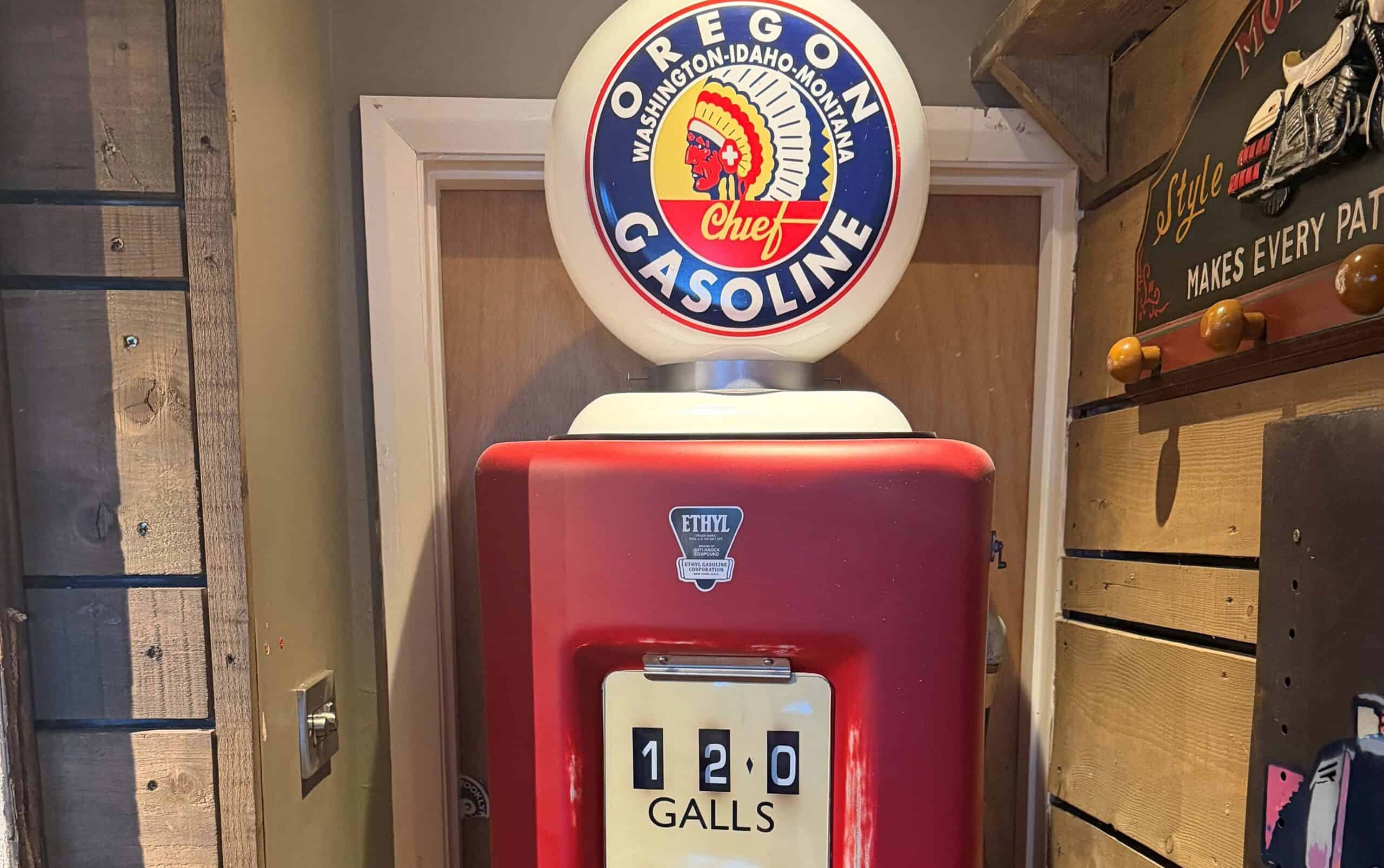
As vehicle efficiency improved and electric vehicle adoption accelerated, the state’s traditional revenue model became unsustainable; Oregon relies on fuel duty to fund its roads and bridges. Rather than presenting road user charging as a solution to multiple societal challenges, the state’s legislature consistently framed it as a replacement for fuel duty. That clarity leads to three lessons that I see as relevant to any developed economy considering the future of road funding.
- Clarity of purpose beats complexity
Many road pricing plans fail before they start because too many objectives are bundled together. Revenue, congestion, carbon, air quality, equity, urban policy, regional development… I could go on. The policy proposition becomes increasingly difficult to explain and increasingly easy to oppose.
Oregon did something different. It focused on a simple message: fuel duty was no longer generating sufficient revenue to fund the road network, so a replacement mechanism was needed. People may not always agree with a policy, but they are more likely to understand it when the rationale is clear.
My view is that this lesson has wider relevance. If the immediate challenge is replacing declining fuel duty revenues, policymakers should be comfortable saying so. Additional policy objectives can come later. A system that exists can evolve, but a system that never launches cannot.
- Public concerns need not be obstacles; they can be design requirements
Once any territory dips its toe into the road pricing waters, it quickly gets to the same three concerns, namely privacy, fairness and trust. And with these, there is a perception of government overreach.
Oregon’s response was not to dismiss these concerns. It built them into the design process. Privacy concerns led to a non-GPS option, and to distancing the state from the user interface. Different reporting methods were developed. Work was undertaken to understand rural and urban impacts and to test fairness assumptions.
This is an important shift in mindset. Public concerns are not communications challenges; they are design requirements. The most successful policies are often those that recognise legitimate concerns early and incorporate solutions from the outset.
- Modularity and choice make change easier
Perhaps the most underappreciated lesson from Oregon DOT’s development of the OReGO scheme is the power of modularity in service design. People are different, their driving patterns are different, their attitudes to data sharing are different, and their willingness to engage with new technology is different.
Rather than imposing a single service offering, Oregon DOT developed options for the reporting methods and for account management. In doing so, they also differentiated between what transport authorities are good at and where the private sector can best step in to innovate once clear rules are established.
In many policy discussions there is a search for the ‘perfect’ design before launch. The Oregon experience suggests another route; create a framework that allows people to participate in ways that suit them. You can then more readily get something operational. And from that point, you can build confidence, learn and adapt. Once you’ve done that, you have more permission to evolve and expand.
The bigger lesson
For me, Oregon’s experience demonstrates that successful reform is rarely about finding the technically perfect solution. It is about finding a politically deliverable and socially acceptable starting point.
Road user charging remains one of the most contentious topics in transport policy. Yet the funding challenge facing governments is becoming harder to ignore as fuel duty revenues come under increasing pressure first from increased fuel efficiency and then from vehicle electrification.
Oregon’s achievement was not simply creating a new charging mechanism. It was focusing on a clear purpose, addressing public concerns through design, and building a flexible system capable of evolving over time. We shouldn’t get too far ahead of ourselves; Oregon’s mandatory OReGO scheme hasn’t launched yet. So there will be more nuanced lessons as it prepares to do so over the coming year. But there is already a lot we can all learn from the journey they’ve been on thus far.
#RoadUserCharging #TransportPolicy #RoadPricing #ElectricVehicles #InfrastructureFunding #Mobility #TransportInnovation #PublicPolicy #OReGO #FutureOfTransport